The resident bat population has left its mark on the floors of the church. The building has a very wide nave and chancel with no arch between them, increasing the air of space. There are good memorials to members of the Cavendish family, who lived in an 18th-century hall near the church. The hall was demolished in the 1930s.
You pass the village pond, which is lively with ducks and attractively overgrown with water plants. At a crossroads stands Doveridge Well, a handsome focal point. Now capped over, it was once an essential part of village life. By the post office are the village stocks, complete with a wooden seat for comfort.
After a short walk across fields and country lanes, you reach the village of Somersal Herbert, which takes its name from the FitzHerbert family, lords of the manor in the 13th century. The hamlet nestles in a hollow among the fields. Approaching Somersal Herbert Hall from the south, you see it as a modern brick mansion. However, as you walk around the hall towards the church, a gateway reveals that the north front is, in fact, a half-timbered Elizabethan hall.
The effect is quite delightful. There is an assortment of gables, timber motifs, and wood-mullioned windows, and the whole front is framed by 18th-century gate piers capped with urns. The hall, built in 1564, is not open to the public.
Next door to the hall is the Church of St Peter, rebuilt in 1874. It contains a Norman font with a memorial to John FitzHerbert and his wife Mary, dated 1601. The tapering cross in the churchyard is even older than the hall; it stands on three steps and is reached by a path lined with roses.
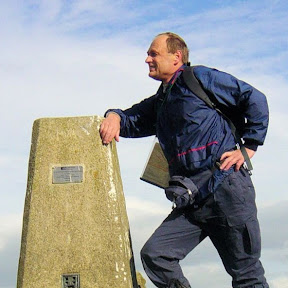
From Somersal Herbert, the walk leads back to the northern fringe of Doveridge, crossing and recrossing the line of the A50, and then makes the climb to Upper Eaton Hill, where, standing at the trig point 157 metres high, there are exquisite views of the surrounding countryside to enjoy. The town of Uttoxeter, with its striking racecourse, can be glimpsed due south.
From the high point of the walk, the route descends to the River Dove, here a mature river making its final approach to the River Trent. The lovely six-arched stone Dove Bridge was built in 1691, replacing an older medieval bridge dating back to the 11th century. From it, with your back to the A50, you can see the misty, distant Derbyshire hills.
On the return to Doveridge, you cross a remarkable suspension bridge, the only one still in use in Derbyshire. The length of its span causes it to spring considerably as weight moves across it — quite an experience when the River Dove is in full flow below.