From the racecourse car park the walk begins along a broad track, passing through woodland which in spring is full of bluebells. As the path rises, Morecambe Bay comes into view. From the woodland the next stage of the walk passes Holker Hall, then follows tracks through rolling farmland.
There are a number of links between Holker Hall and Cartmel Priory. Before the dissolution of the monasteries, Holker was part of the monastic estate, and in return owners of Holker Hall have made themselves responsible for carrying out the restoration and upkeep of the priory.
The route up Hampsfell is along a grassy track. Near the summit are rocky outcrops of limestone; this geological feature of stone eroded by acidic rainfall is limestone pavement, which is synonymous with the Yorkshire Dales to the east. Here you will find tiny, bright yellow mountain pansies, pale blue harebells, and purple heather among the grass, while ferns find a sheltered home in the rocky crags and crevices, dotted around with stunted hawthorn trees blown into odd shapes by the winds.
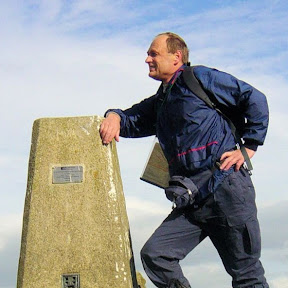
From the summit of Hampsfell — which is one of Alfred Wainwright's Outlying Fells of Lakeland — there are panoramic views in all directions, with the vastness of Morecambe Bay and the promontory of Humphrey Head pointing out to the sands being particularly notable to the south.
On the walk down from Hampsfell, Cartmel Priory is in view all the way. The monastery first appeared on the scene around 1188; after the dissolution the priory was used as a courthouse and later as billeting for Cromwell's troops during the Civil War. Myth has it that local folk, displeased with the presence of the soldiers, fired muskets into the south-west door (now known as Cromwell's Door), where the bullet holes are still evident to this day.
Acknowledgment: Text derived from the Out and Out Series; Discovering the Countryside on Foot. Pictures courtesy of Wikipedia.