A Walk Around a Historic Headland and Smuggler's Haunts
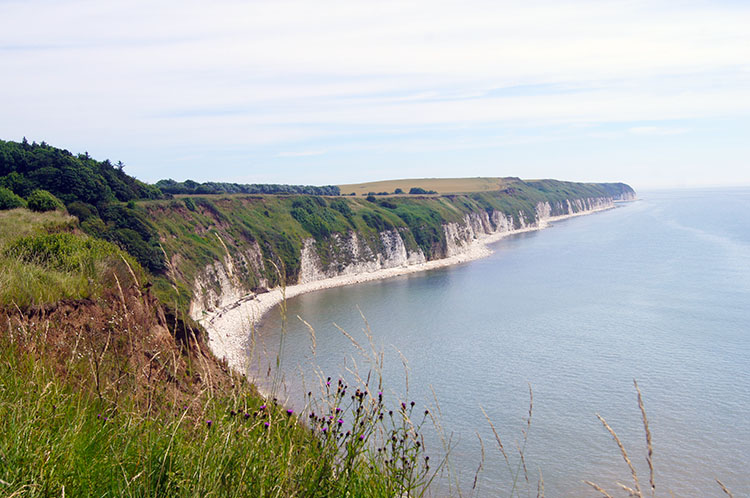
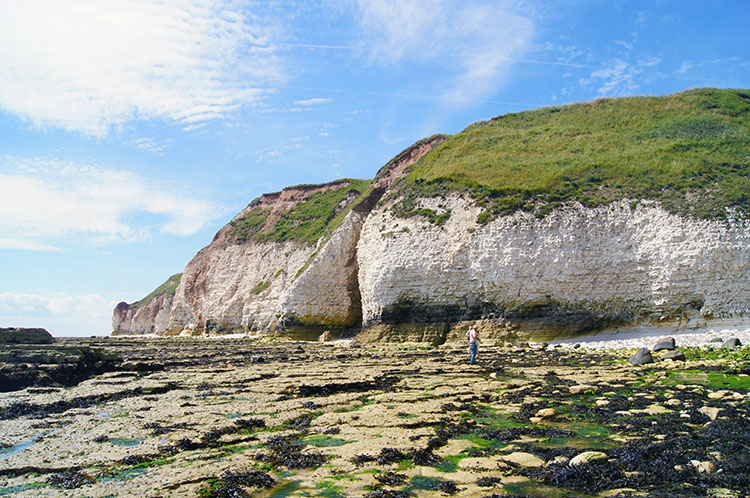
Flamborough Head is a massive chalk headland on the East Yorkshire coast that juts far out into the North Sea, forming one of the most dramatic coastal features of the British Isles. Cliffs up to 400 feet (120 metres) high in places have been gouged and carved by the wild North Sea into a series of often fantastic shapes, with caves, arches, stacks, and even blow-holes all around the headland, but particularly impressive around the Head itself by the famous lighthouse.
I first came to Flamborough in the 1980s and was instantly impressed by the brilliant white of the place. I never knew it at the time, but this is due to the bedrock which is chalk; this particular seam was laid down as mud on the sea floor in the Cretaceous age of the dinosaurs including Tyrannosaurus Rex. The layer of chalk is up to 550m thick and forms a great swathe from the White Cliffs of Dover in the south to Flamborough Head in the north. I always knew the "White Cliffs of Yorkshire" were special — let's go for a walk along them shall we.
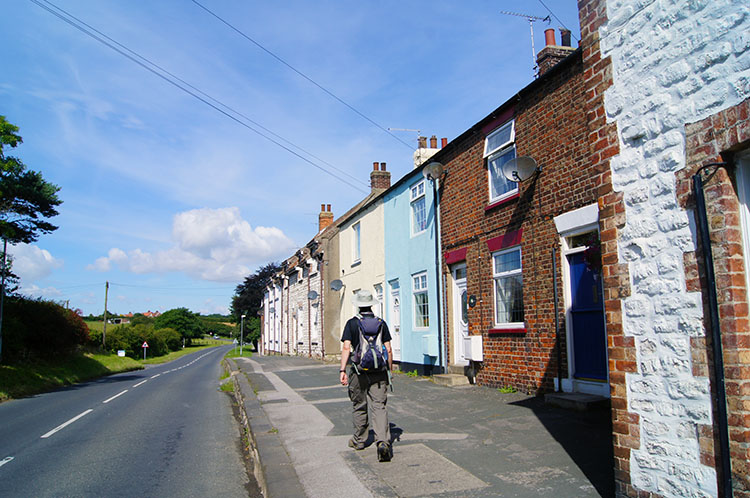
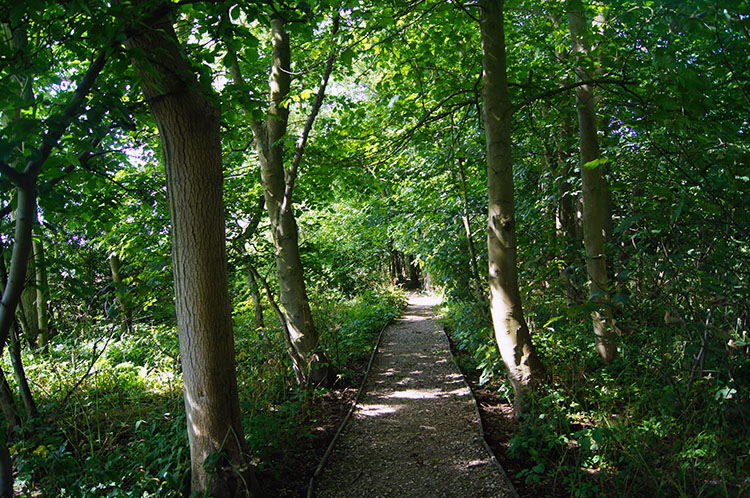
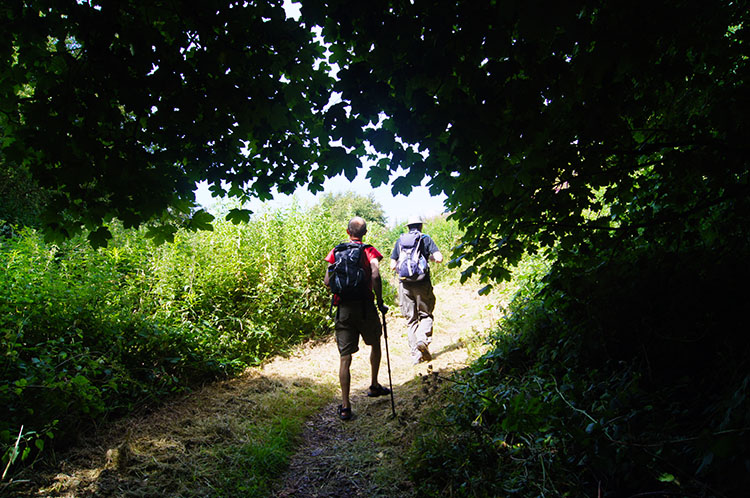
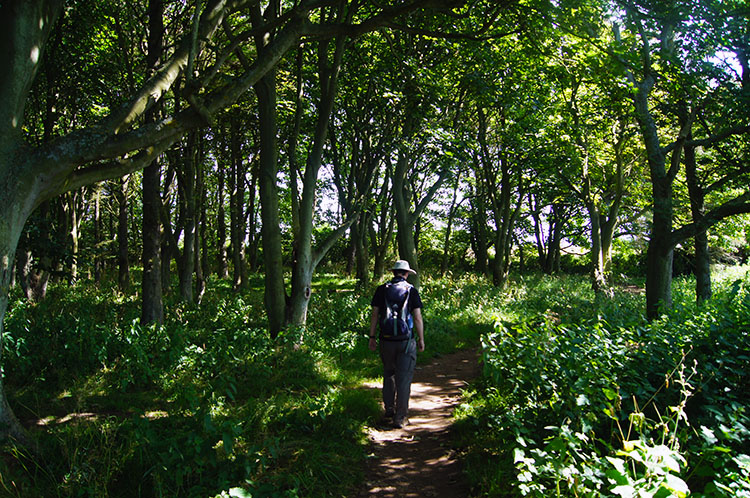
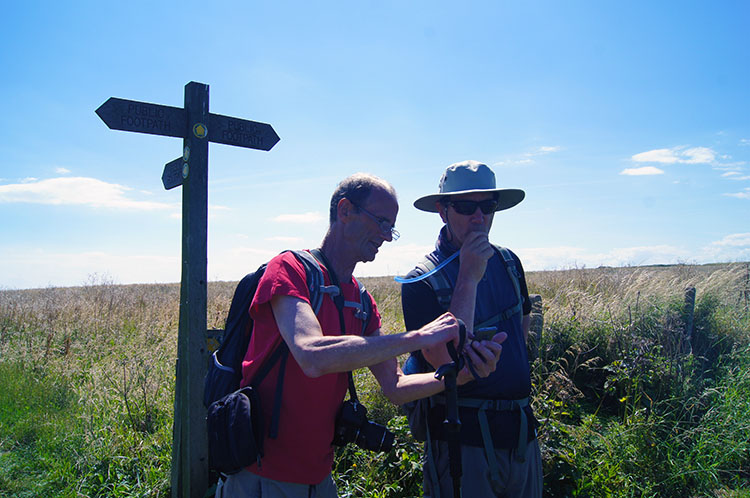
I was in the company of Dave and John on a very hot midsummer's day — perfect conditions to enjoy the dazzling white colours of the cliffs. We parked up in West Street near the first crossroads coming in from Bridlington and set off walking back along Bridlington Road towards Dane's Dyke. After 600 metres we turned left off Bridlington Road to follow the tree-lined access road to Home Farm; on the left-hand side of the road was a lovely path to follow between the trees of Home Farm Plantation. I took that choice — a much better alternative to Dave and John's route along the side of the tarmac road.
Heading west from Flamborough to Dane's DykeHome Farm Plantation, Flamborough
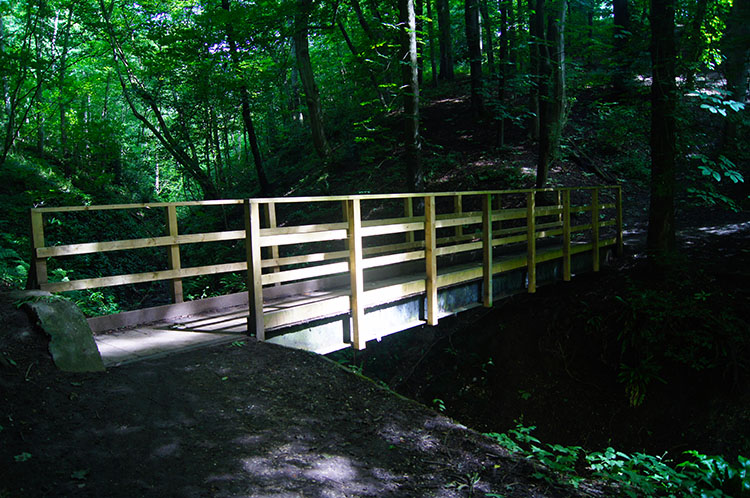
Soon my short woodland trail through Home Farm Plantation came to an end as we passed the entrance to Home Farm. Here the tarmac road ended at a car park — we had reached Dane's Dyke Nature Reserve. The dyke itself is an ancient ditch and bank earthwork which extends 2.6 miles (4 kilometres) across the whole of the Flamborough Headland, effectively cutting it off from the rest of the mainland (perhaps the settlers here wanted to keep the beautiful white cliffs and luscious farmland to themselves?). Undoubtedly constructed as a defensive feature, it would have posed a formidable barrier topped with a wooden palisade fence. The dyke is shrouded by lush woodland now and most prominent in the south; we were walking through the best of it, and lovely it was — an enchanting short walk until we emerged into the light.
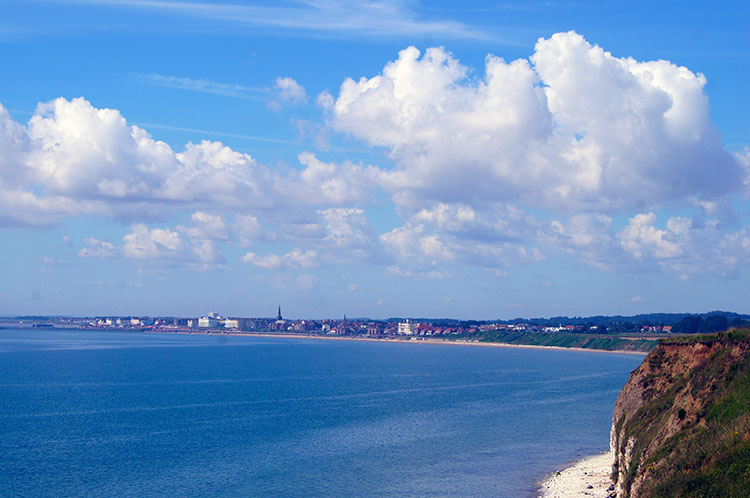
The contrast from the shielded dappled light in the woodland of Dane's Dyke to the full intense sunshine of the coast path was significant. It was late morning, the sun intense, and the temperature in the mid-20s, with little sea breeze to cool us either so we took to walking gently along. The first views from the coast were breathtaking: looking south-west, the coastal resort of Bridlington looked like it does in an enticing picture postcard, bathed in sunshine with blue skies and pretty fluffy white clouds, while looking due east the cliffs extended out to sea pointing like a finger showing the way.
Wooden footbridge across Dane's DykeInto the light
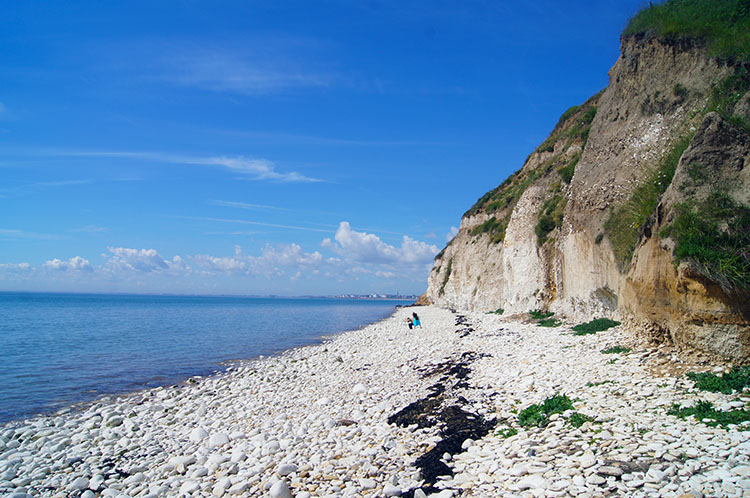
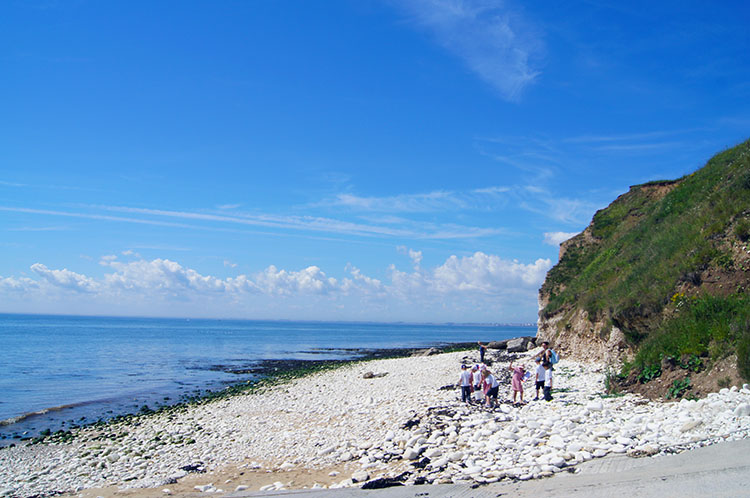
Before heading off along the coast path we took to the pebble beach at Dyke's End. Bleached white pebbles covered the beach, and a few groups of people sat in peace looking out to the lovely blue sea. After taking a short look out on the scene ourselves we set off from Dyke's End and climbed to the cliff tops — not to be our last ascent of the day! On reaching the cliff top we left the open views to track on a short walk through Cliff Plantation, a lovely stretch of native coastal woodland.
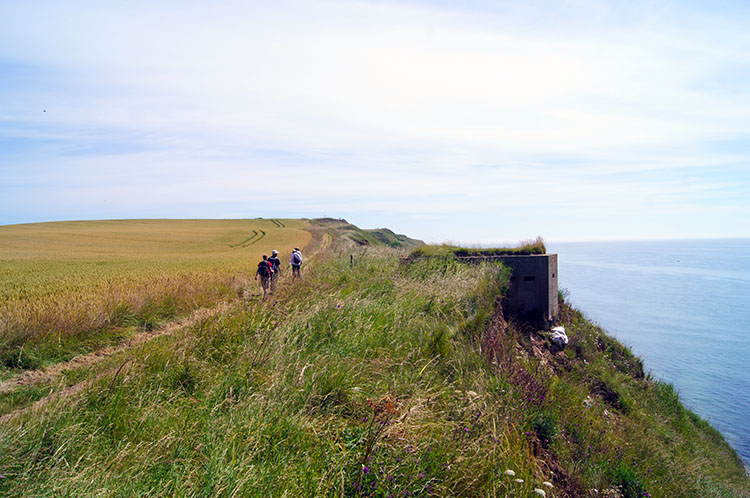
After emerging from the shade of Cliff Plantation we embarked on the definite coastal path for the first time. It was very pleasurable indeed: apart from the unchanging view to our right out to sea, the view to our left was an ever-changing scene of halcyon farming. First we fringed fields of cereal crops including wheat and barley, then walked past vegetable crops. Attention on identifying field crops was interrupted when we came to a WWII concrete pillbox built into the cliff top looking out to sea. Once occupied by artillery men and Home Guard, the occupants were now nesting swifts, and Dave took a look inside almost getting his nose clipped by one flying through the watch-post.
Looking from Dyke's End to BridlingtonLooking east towards Flamborough Head
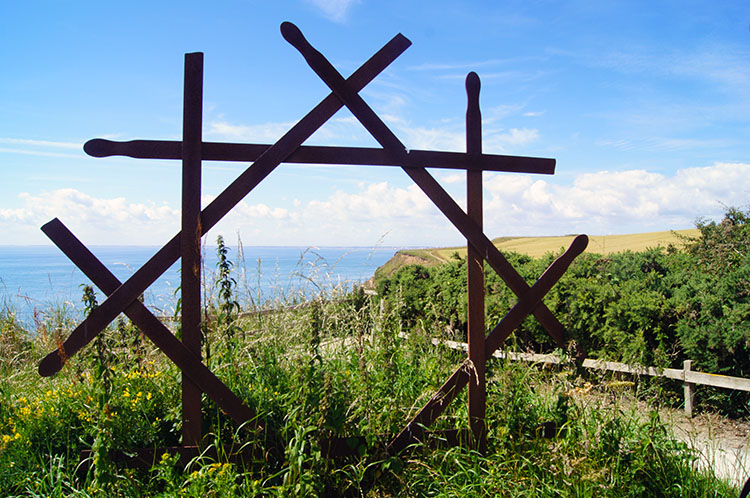
After his close call we continued on to South Landing, making another short descent from cliff top to seashore where the beach was pebbled with a few patches of sand. From South Landing (which has a Lifeboat Station and RNLI shop) we climbed back up to the cliff top, coming across a seat looking out to sea and a metal sculpture — an eight-pointed star celebrating the local living heritage of sword dancing, with a seat mentioning local families (Thaves, Chapman, Hodgson, Gross, Atkinson, Moverley, Coultas).
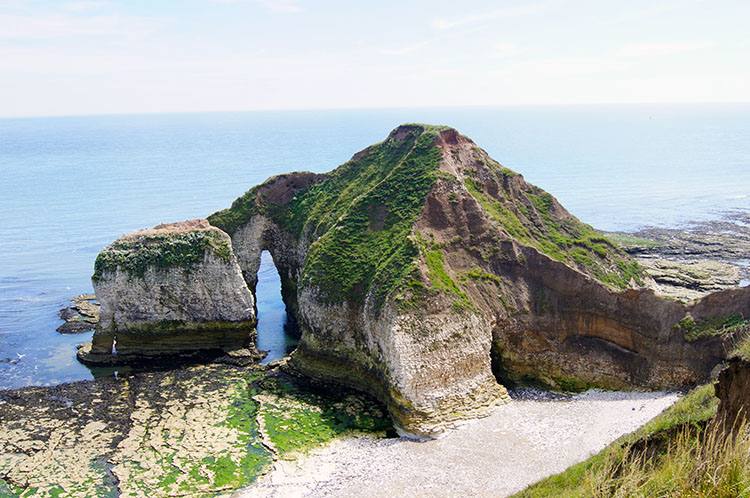
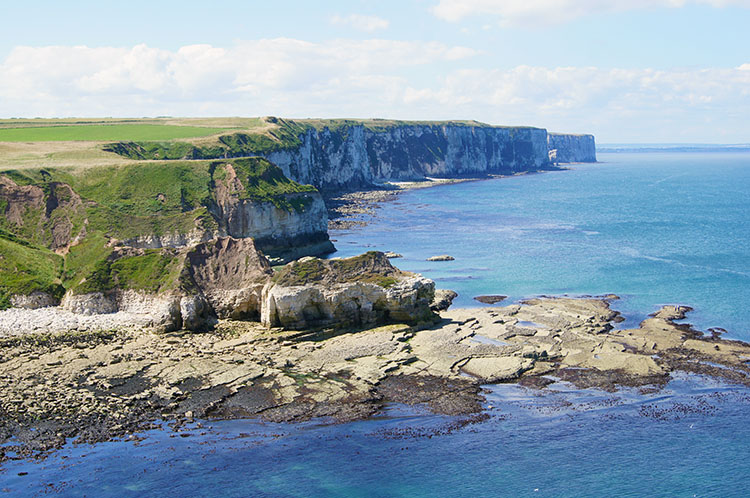
We continued towards Flamborough Head. On Headland Way near Cross Bow Hill, crop fields gave way to coastal flower meadows, and soon we sighted the lighthouse in the distance. Closing in on the head proper we came to High Stacks and immediately stopped in our tracks at the view of sea stacks and sea arches directly below us. I was drawn down to the sea, following a path down to see if I could get intimate with the temporary features (one day the arch will collapse to become a stack, and one day the stack to oblivion), but I couldn't get round without wading so satisfied myself with a close-up view of the bleached cliffs instead.
White pebble beach at Dyke's EndCliff Plantation
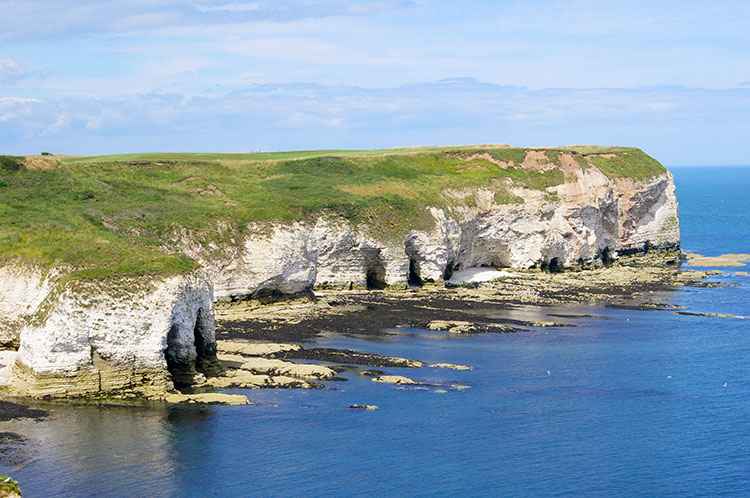
Once I rejoined my walking pals on the headland we stood and looked in awe once more. The chalk gives this place such a special character, and I was definitely entranced by the view: the sea stack, sea arch, and accompanying spur which will one day be cut off from the headland were a beautiful picture, alongside Flamborough Head itself shimmering white with a green-carpeted top and deep blue sea surround. The processional line of caves cut out of the chalk by aggressive tides made the image complete — magical!
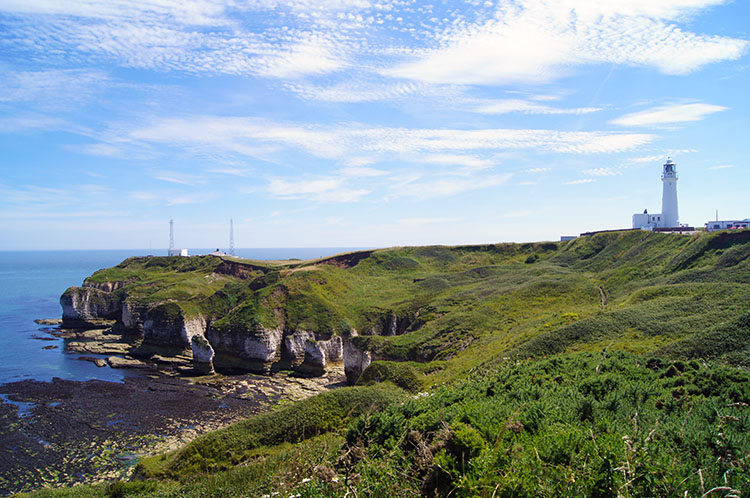
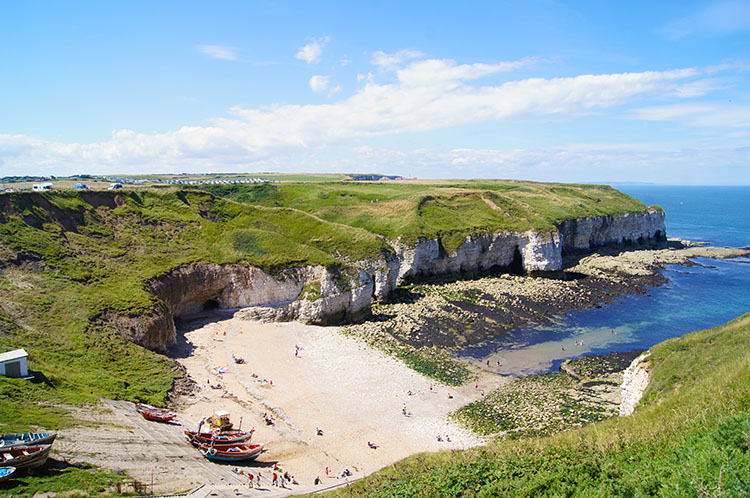
We continued to Flamborough Head, where the lighthouse drew us safely to the sanctuary of a seat to take lunch. The cafe near the lighthouse was teeming with people enjoying the perfect day out, and a large group of school kids walked past on an outdoor activity. We lingered for 30 minutes over lunch, after which John treated us all to ice cream cones as we walked leisurely along the coast path to North Landing, a sheltered cove with a sand beach and a series of caves.
World War Two Sea Defence PillboxSouth Landing
In all my excitement I haven't really explained a couple of things: first, the series of ups and downs we made (with constant interruptions to level cliff-top walking and descents to coves adding up to almost 448 metres of climbing on a hot day); and second, the changing scene below at sea level with outcrops, stacks, caves, arches, coves, sand beaches, and rock outcrops. It was a moving picture show of the highest quality, and the section from Flamborough Head to North Landing and beyond to Thornwick Nab is hard to beat for sheer coastal variety in Yorkshire.
Many were enjoying their day out on Flamborough Headland — youngsters playing on sandy beaches, teenagers bathing in the North Sea, courting couples, and families picnicking. Everyone was having a good time, but inevitably all good things must come to an end, and at North Cliff (seven miles on from Dyke's End) our very good walk along the brilliant Flamborough Headland Heritage Coast concluded. We lingered by our exit point while Dave and John chatted, before heading inland along field edges towards Flamborough (a path back to the village that was, frankly, a bit boring!).
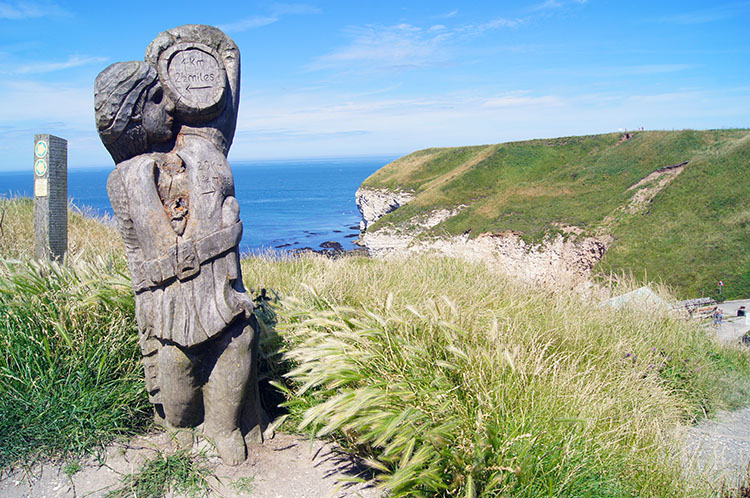
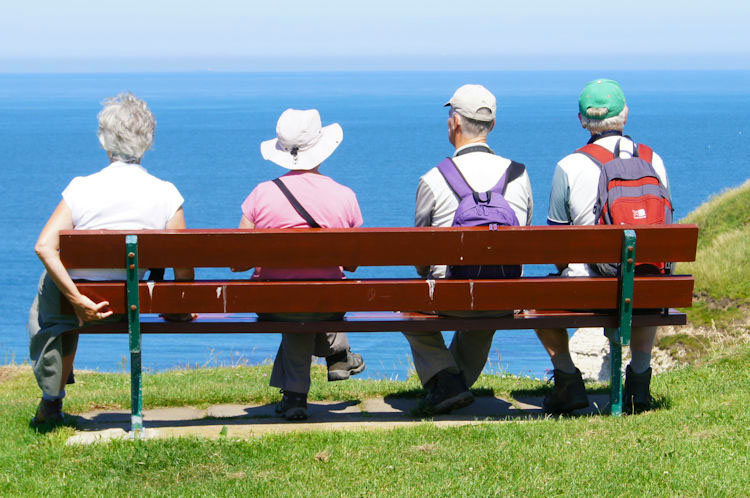
Celebration of local sword dancingChalk cliffs near High StacksHigh Stack Sea ArchFlamborough HeadFlamborough Head and the lighthouseNorth LandingA smuggler shows the way we have to goThornwick NabEnjoying the viewLeaving the coastline at North CliffWalking through FlamboroughSt Oswald's Church, Flamborough
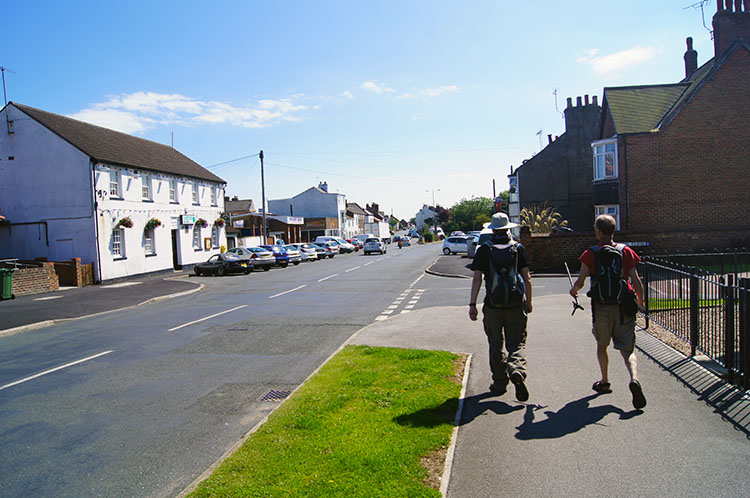
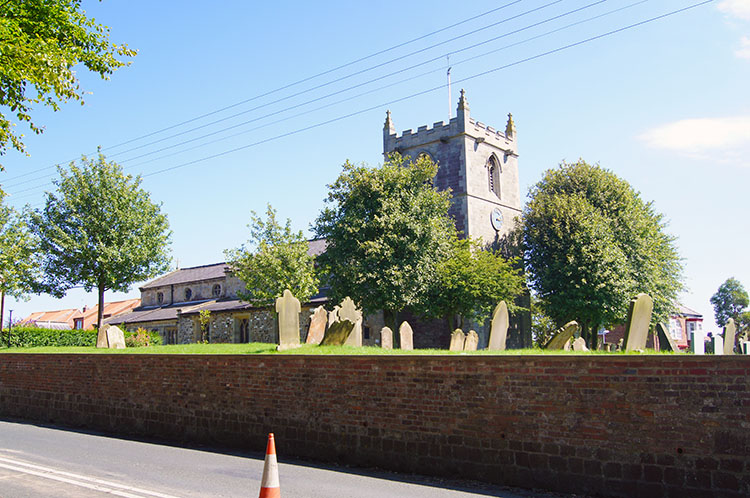
We walked into the village at Craikwells which led to Chapel Street, following it back to our start. I found the walk through the village interesting as people going about their business provided distractions — a car owner discussing repairs at a garage, people chatting outside a cafe, shoppers parking, and workmen laying superfast broadband cables. These events took us to the site of Flamborough Castle (a small ruin of chalk, not evidently recognisable as a castle really) and soon after to the much more impressive Flamborough Church before returning to the car.
In conclusion, this was really a memorable walk: the seven-mile stretch of coastal walking was amongst the finest I have ever done, and to have such coastline in my home county of Yorkshire is a real bonus. Chalk cliffs are up there with the best, providing such staggering variety — and let's not forget Dane's Dyke which was a perfect bonus!
Acknowledgment: Text derived from the Out and Out Series; Discovering the Countryside on Foot. Pictures courtesy of Wikipedia.